Does Adding Rideshare Increase Insurance
Yes, it raises your premium, but it closes a real gap your personal policy leaves open the moment you turn the app on.
Your personal policy stops the moment you go on duty
A personal auto policy is written for personal use. The instant you open the app to accept rides, you're using your car commercially, and most personal insurers exclude that activity entirely. That exclusion is why the gap exists in the first place, and it's also why adding coverage costs something. You're not paying more for nothing. You're paying for a period of risk your old policy simply never priced in.
The period between turning the app on and accepting a request is the riskiest from an insurance standpoint, because the app's own coverage during that window is usually thin, and your personal policy may deny the claim outright if it finds out you were logged in. An endorsement or hybrid policy is built to bridge exactly that window, along with the drive to pick up a passenger and the trip itself. That's the real product you're buying.
The cost increase reflects added exposure, not padding. You're on the road more, often in unfamiliar areas, with a paying passenger whose medical bills and legal claims could follow an accident. Insurers price for that. In most cases the increase is modest compared to what a denied claim or a canceled policy would cost you later.
Where this varies is by state and by insurer. Some states require rideshare companies to provide more complete coverage during the waiting period, which can lower what you need to buy. Some insurers won't offer a rideshare endorsement at all and require a separate commercial or hybrid policy instead. Check both your state's rules and your specific insurer's options before assuming the standard add-on applies to you.
What actually changes on your policy
- Premium goes up some Adding rideshare coverage almost always raises your premium a bit. Ask your insurer for the exact difference before you commit, since it varies by company and driving history.
- The waiting gap closes The endorsement covers you from the moment you go online, not just once you have a passenger. Confirm this explicitly, since some policies only start coverage at pickup.
- Your deductible may shift Some rideshare endorsements carry a different deductible than your personal policy. Ask what applies during each phase of a trip so you're not surprised after a claim.
- You avoid cancellation risk Driving for pay without telling your insurer can lead to a canceled policy if discovered. Disclosing it and adding proper coverage protects your ability to get insured later.
- It applies to your car only Coverage follows the vehicle and policy you added it to, not every car you might drive. If you switch cars or add a second vehicle, update the endorsement too.

Whether you add the rideshare endorsement
If you do
You pay a little more each month, but you're covered from the second you open the app, through pickup and the trip itself. If you're in an accident waiting for a request, your insurer can't deny the claim for commercial use. Your policy stays intact and renewable.
If you don't
You save a small amount now, but you're exposed during the waiting period and risk a denied claim if an accident happens then. If your insurer discovers undisclosed rideshare driving, they may cancel your policy entirely, making it harder and costlier to get covered again.
Compare quotes for a rideshare endorsement now that you know exactly what it closes and why it costs what it does.
A driver finds out the hard way what wasn't covered
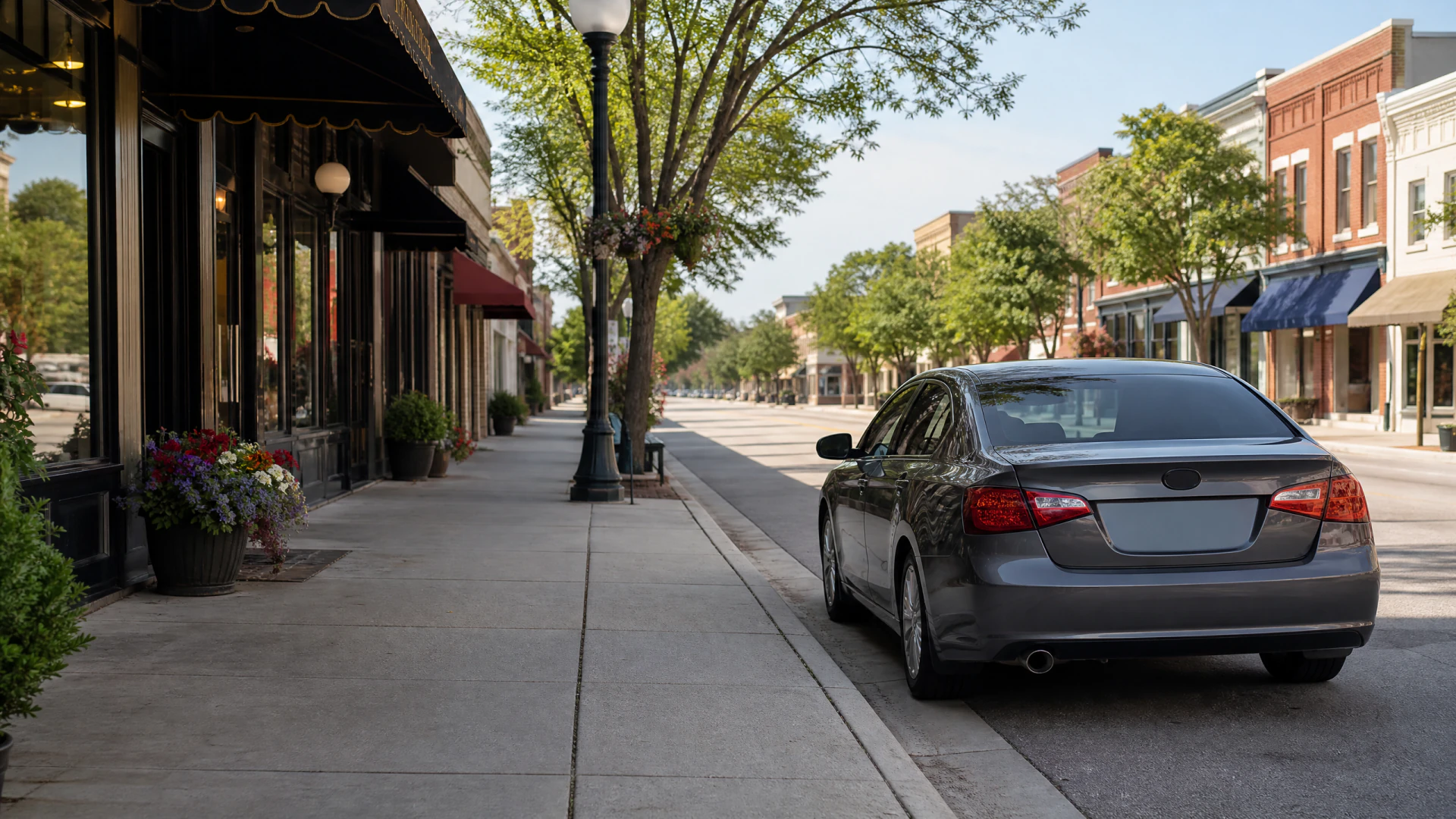
A driver had been using a rideshare app on weekends for extra income, assuming his standard personal policy and the app's own coverage together had him handled. One evening he turned the app on and was waiting at a parking lot for his first request when another car backed into him, damaging his bumper and bending a wheel. He filed a claim with his personal insurer, listing the time and circumstances honestly.
His insurer denied the claim, citing the commercial use exclusion, since the app being on counted as being available for hire even without a passenger. The rideshare company's own coverage for that waiting period turned out to be minimal and didn't cover his vehicle damage at all. He ended up paying for the repair himself. Afterward he added a rideshare endorsement to his policy, which cost him a modest amount more per month, and confirmed with his insurer in writing that it covered the entire waiting period, not just active trips. The next time a similar situation came up, the claim was paid without dispute.
Will my personal insurer cancel me just for driving rideshare at all?
Not automatically, but it can happen if you drive without disclosing it and without proper coverage, especially after a claim reveals the commercial use. Insurers vary in how strictly they enforce this. Some will simply decline to renew, others may cancel mid-term. Disclosing upfront and adding the right coverage avoids this risk, and it's worth asking your insurer directly what their policy is before you start driving.
Does the rideshare company's insurance cover me before I add my own endorsement?
Only partially, and usually just once you're logged into the app, with the weakest protection during the waiting period before a request. Coverage improves once you accept a ride and again once a passenger is in the car. Check your specific app's coverage document, since the exact phases and limits differ by company and sometimes by state.
Is a rideshare endorsement cheaper than a full commercial policy?
Usually yes, because an endorsement adds targeted coverage to your existing personal policy instead of replacing it entirely. A full commercial policy makes more sense if you drive many hours or also do other paid driving work like delivery. Ask your insurer which option fits your actual driving pattern, since the right answer depends on how much and how often you drive.